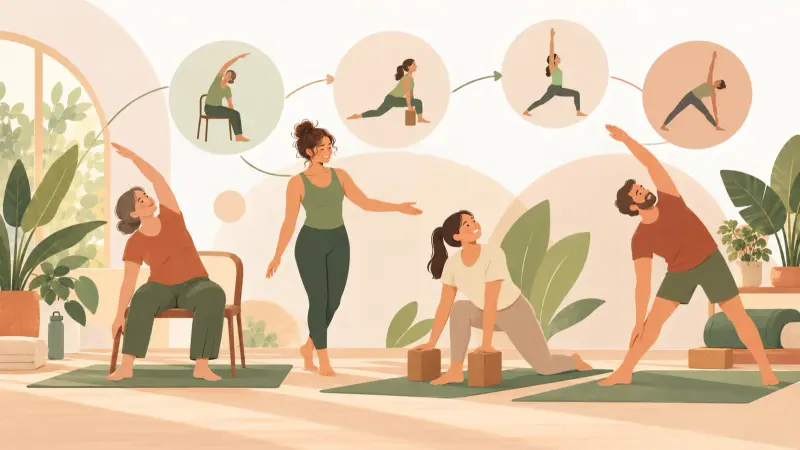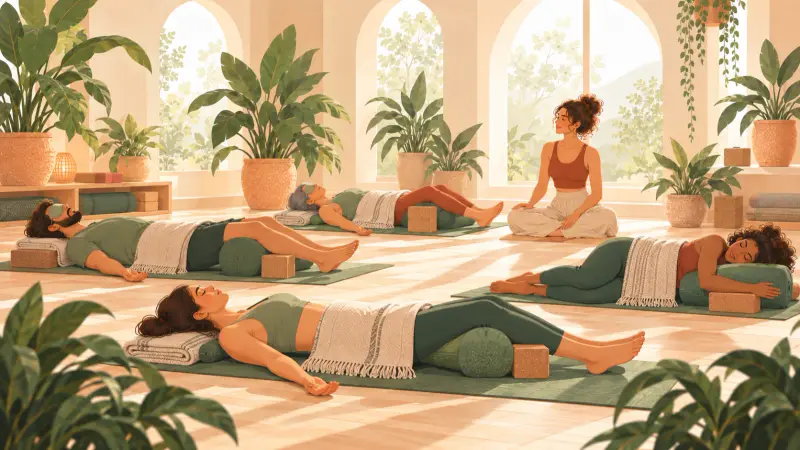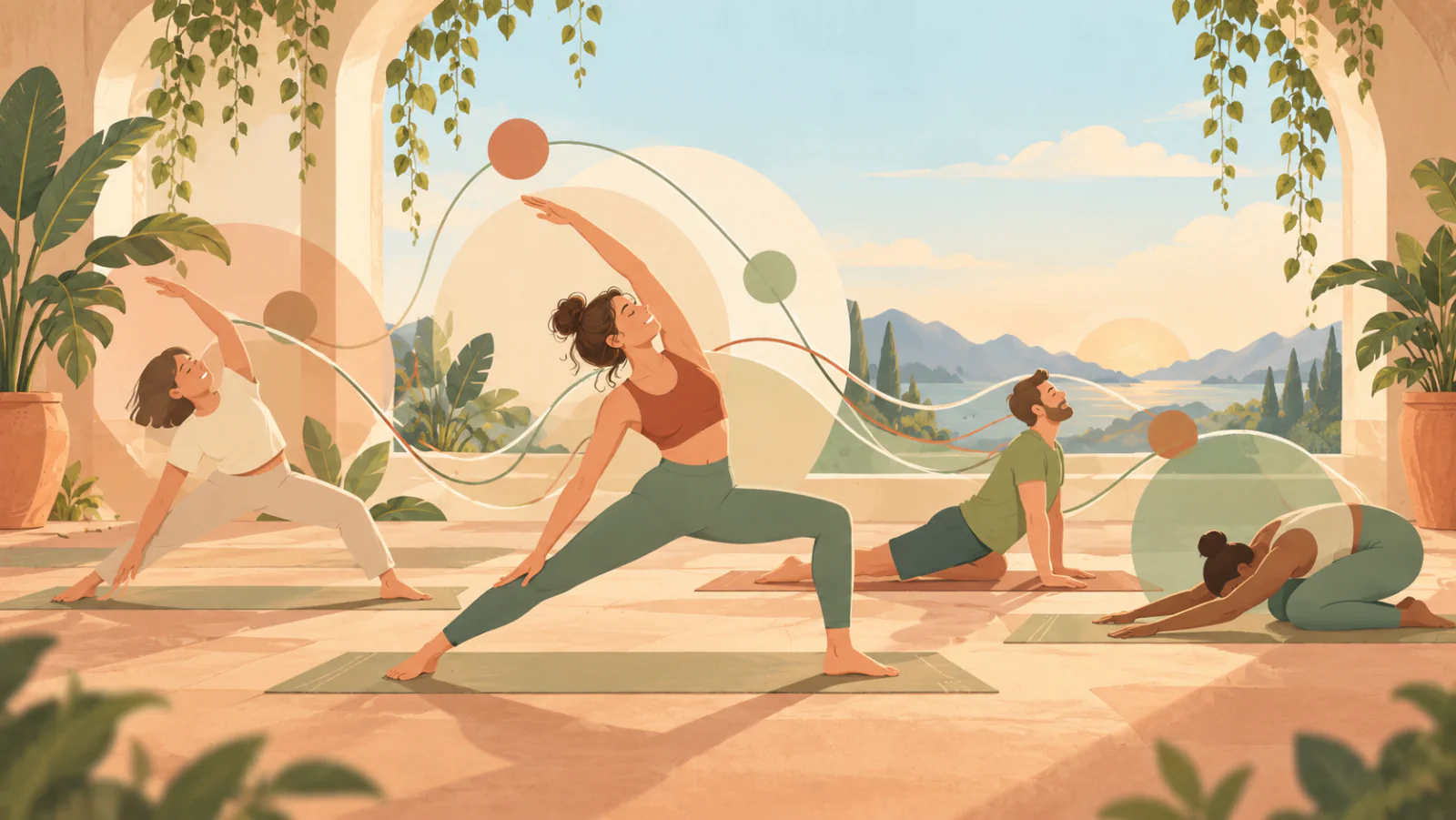
A well-timed breathing cue can help students pay attention, but a yoga class does not need to breathe in unison. If you try to force an entire room to breathe at your exact pace, you risk causing anxiety or physical discomfort. Your lesson plan must leave room for individual rhythms.
Start with Noticing
Invite students to notice their usual, natural breathing without making it deeper or slower. Paying attention to the feet on the mat or the sounds in the room can remain an available anchor if observing the breath feels uncomfortable. Explain this option as simply and warmly as your main invitation.
Make Coordination Optional
With a familiar movement, you might suggest raising the arms on an inhalation and lowering them on an exhalation, and then returning to natural breathing. Do not require every single gesture to match your physical demonstration. Offer fewer or slower movements so students can keep breathing comfortably.
Separate Observation from Technique
Creasana · Workshop
Try it in your planning
- Identify the specific breathing cues in your sequence draft.
- Explicitly offer natural, unforced breathing as a valid option.
- Rehearse your cues out loud without making your own rhythm compulsory.
- Remove any instructions that require a student to strain their lungs to keep up.
References for further exploration
These planning examples should be adapted to your group and training. References provide context for the topics discussed; they do not validate every example sequence.