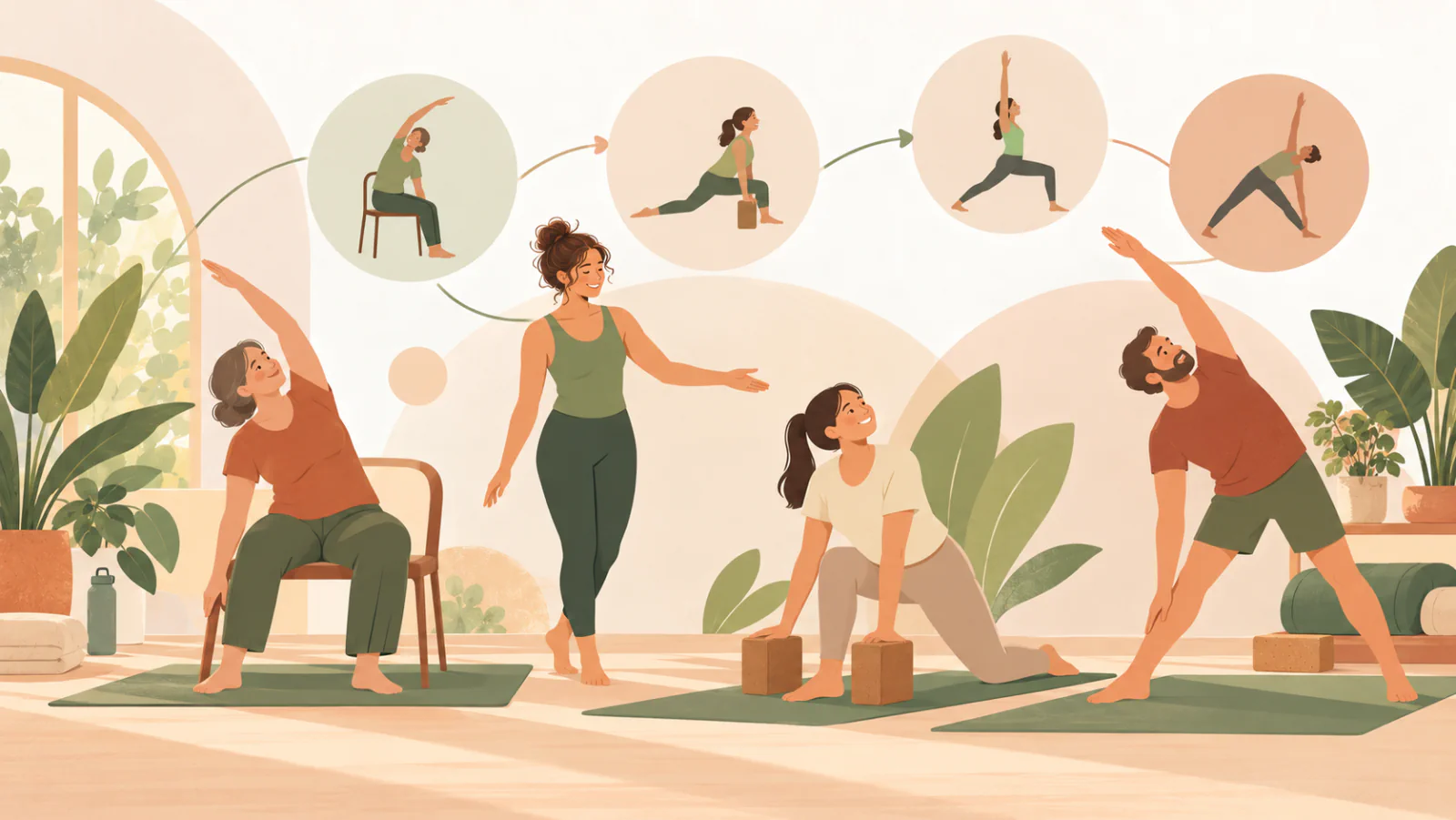
Being “new to yoga” does not describe someone’s age, fitness level, or physical capacity. One person may simply be learning the vocabulary after years of athletic training, while another may be seeking a comfortable, gentle way to participate. Designing a beginner class means making the experience clear and predictable.
Make the Class Predictable
Start by explaining the main stages of the class and showing where props are available. Begin with a physical situation that is easy to observe and describe. Introduce pose names alongside everyday language, and then reuse those familiar instructions when a position returns later in the sequence. Consistency builds confidence.
Introduce One New Demand at a Time
Combining a new pose, an unfamiliar transition, and a prescribed breathing rhythm can be overwhelming to process all at once. Start with the position itself, allow students to organize themselves, and then offer a small movement. Repetition here builds familiarity without requiring everyone to make the same shape.
Make Stopping Understandable
Creasana · Workshop
Try it in your planning
- Write three clear cues you can reuse throughout the class.
- Remove anatomical jargon that does not help a beginner take action.
- Prepare a relevant seated or supported option for complex poses.
- Ask students at the end which instruction was the easiest to understand.
References for further exploration
These planning examples should be adapted to your group and training. References provide context for the topics discussed; they do not validate every example sequence.