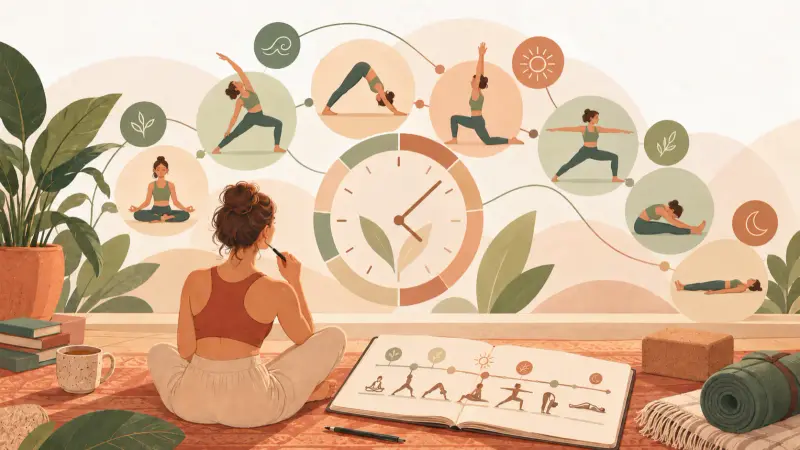
Asking “Did you enjoy it?” as students walk out the door rarely provides enough useful information to revise a sequence. Useful feedback addresses a specific element of your teaching that you can change.
Ask About an Observable Detail
Try asking, “Which change of position was difficult to follow today?” or “Was there enough time to set up the equipment for the bridge pose?” Ask one or two casual questions rather than presenting a formal survey after every class. Always allow people to respond later, or choose not to respond at all.
Separate Different Kinds of Information
When reviewing feedback in your teaching notebook, write what you observed, what was explicitly said, and your hypothesis on three separate lines. Noting “Several people waited” does not explain why. Was it a confusing instruction? A crowded room layout? Poor timing?
Change Something and Compare
Creasana · Workshop
Try it in your planning
- Choose one specific aspect of your class you want to understand better.
- Ask a concrete, optional question to a trusted student.
- Separate your observations, the student’s comments, and your hypotheses in your notes.
- Try one small adjustment before deciding to rebuild the entire session.
References for further exploration
These planning examples should be adapted to your group and training. References provide context for the topics discussed; they do not validate every example sequence.