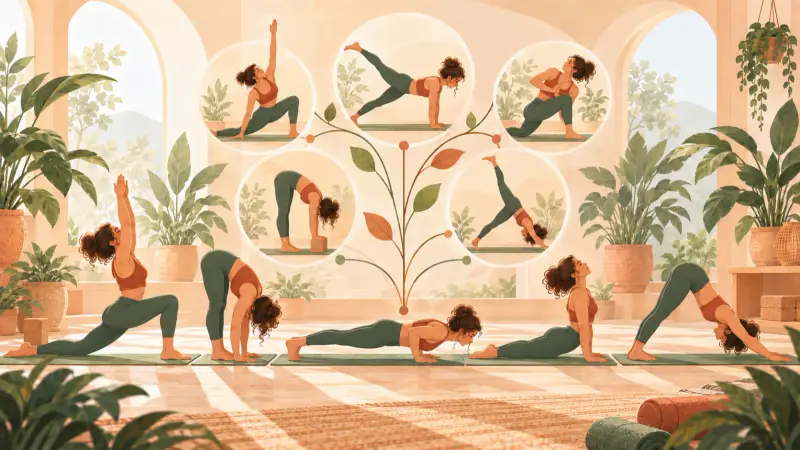
Reusing a sequence can help students build on what they have learned. Novelty for the sake of novelty can overwhelm students. To refresh a class, first identify what already works and what would be useful to explore differently.
Keep a Recognizable Structure
Retain the overall order and some familiar transitions. This leaves more time to explain a new question or theme. A familiar structure also helps you and your students notice how a specific change affects the practice.
Choose One Thing to Vary
Instead of changing the poses, change the parameters. Alter the time available to notice a sensation, introduce a new prop, or use fewer instructions. None of this requires a more complex pose. For instance, revisiting a familiar standing position but asking students to place a hand on the wall completely shifts the exploration without creating a hierarchy of “advanced” versus “beginner”.
Compare with a Purpose
Creasana · Workshop
Try it in your planning
- Duplicate a sequence you have taught recently.
- Choose exactly one variable to change (e.g., pacing, props, or a specific cue).
- Write down what you hope to observe through this change.
- Compare the feedback before adjusting a second variable.
References for further exploration
These planning examples should be adapted to your group and training. References provide context for the topics discussed; they do not validate every example sequence.