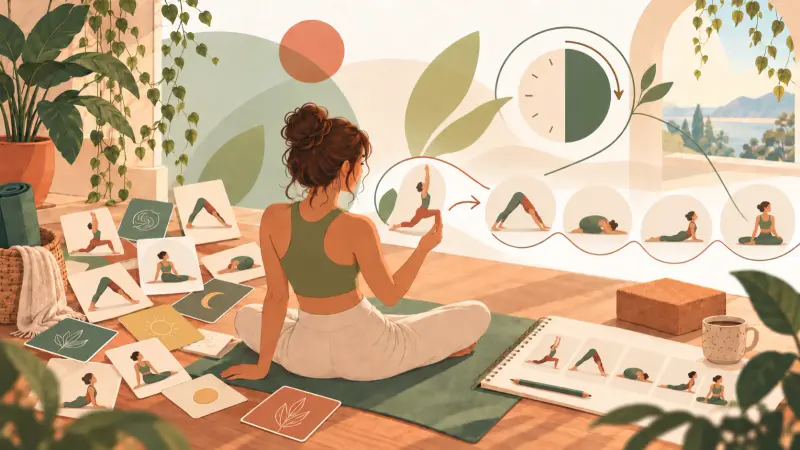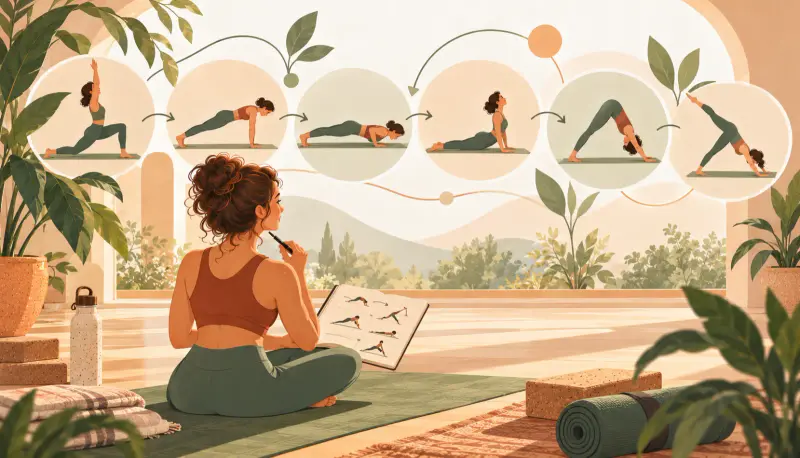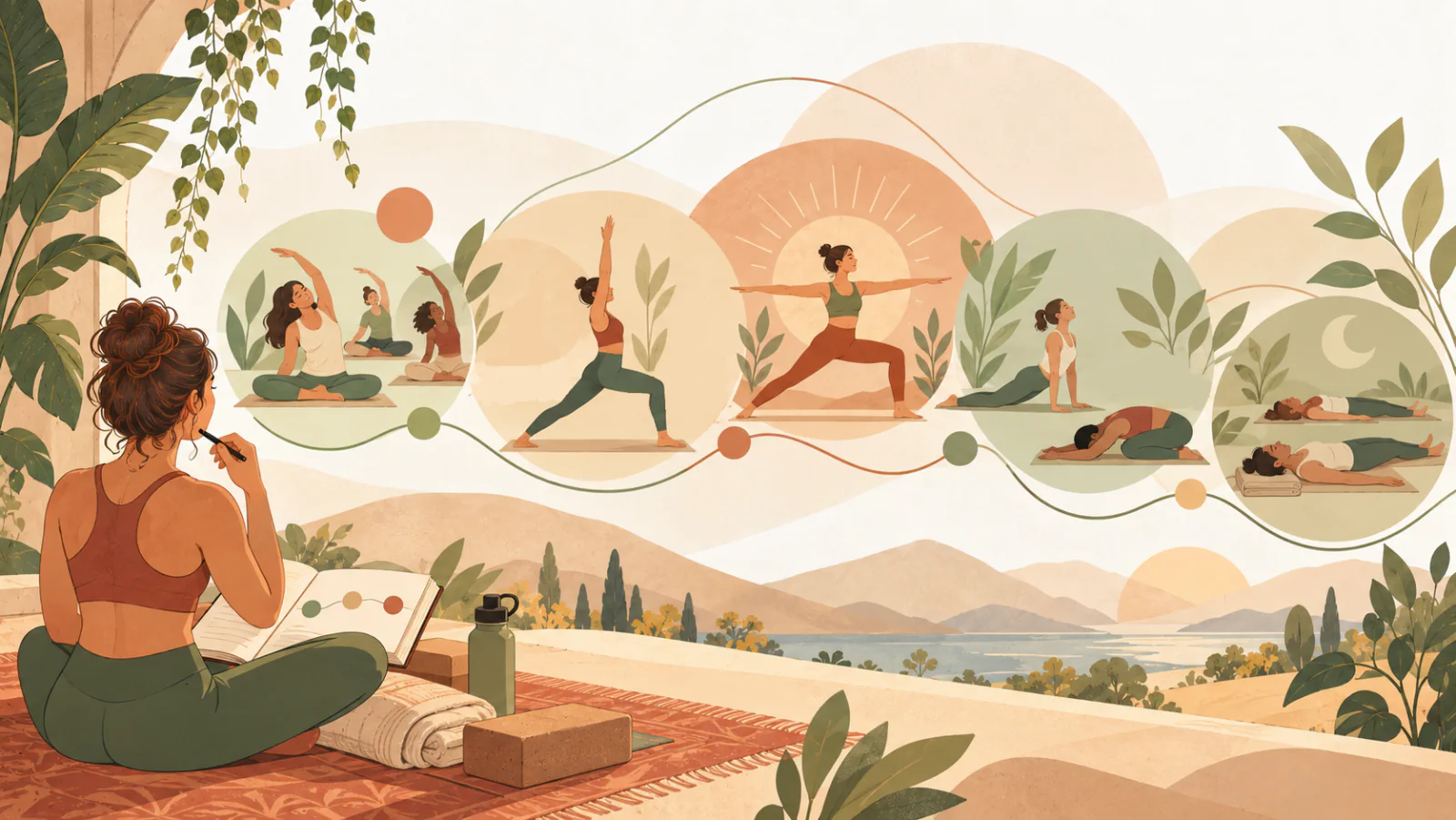
An hour of teaching is not an hour of poses. Instructions, changing sides, and setting up props all consume time. To prevent your class from turning into a race against the clock, you need to sketch the architecture of your session before you fill it with asanas.
Protect the Opening and Closing
Try this foundational planning template for a 60-minute session:
- 5 minutes: Arrival and grounding.
- 10 minutes: Warm-up and preparation.
- 25 minutes: Main exploration (optional: peak pose).
- 10 minutes: Winding down.
- 10 minutes: Rest (Savasana) and closing.
Adapt these allocations to your specific group and teaching style. Reserve time for the ending first. Planning rest and the end of a yoga class should never depend on whatever time happens to remain.
Choose One Practice Question
“How can our base stay steady while our arms move?” gives a clearer direction than “Work the whole body.” Select a few situations that explore this question in different spatial orientations. While a peak pose can help organize the class, remember that not every sequence requires one to be effective.
Prepare a Shorter Version
Identify a block of poses you can remove without breaking the progression. Keep the core experiences students need to understand later instructions. If the group needs more explanation during the warm-up, reduce the number of repetitions rather than rushing the entire final section. You can move blocks and adjust their durations using the Creasana sequence builder.
Creasana · Workshop
Try it in your planning
- Draw five blocks totaling 60 minutes.
- Write one main purpose for each block.
- Include buffer time for transitions, pauses, and teaching both sides of the body.
- Mark an optional passage, then rehearse the class out loud with a timer.
References for further exploration
These planning examples should be adapted to your group and training. References provide context for the topics discussed; they do not validate every example sequence.