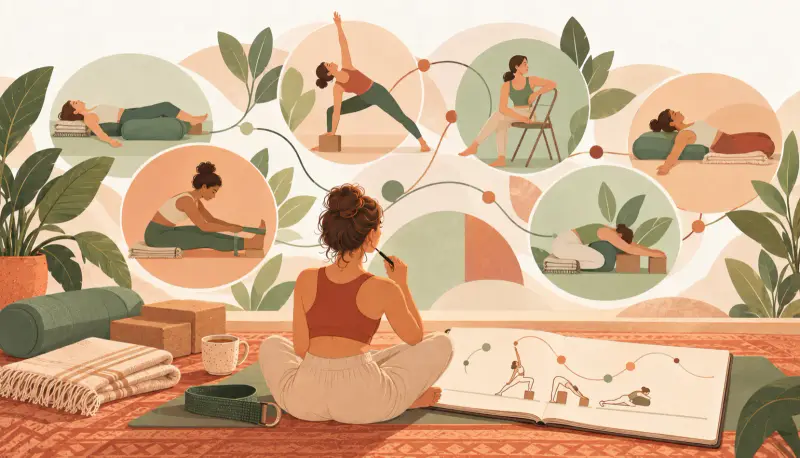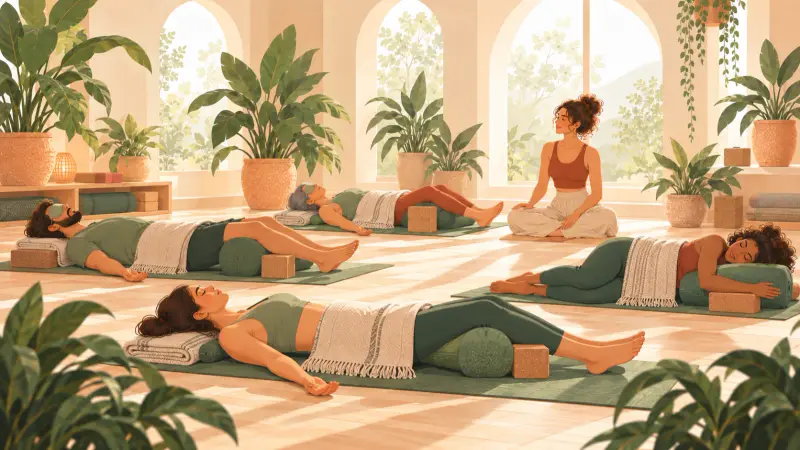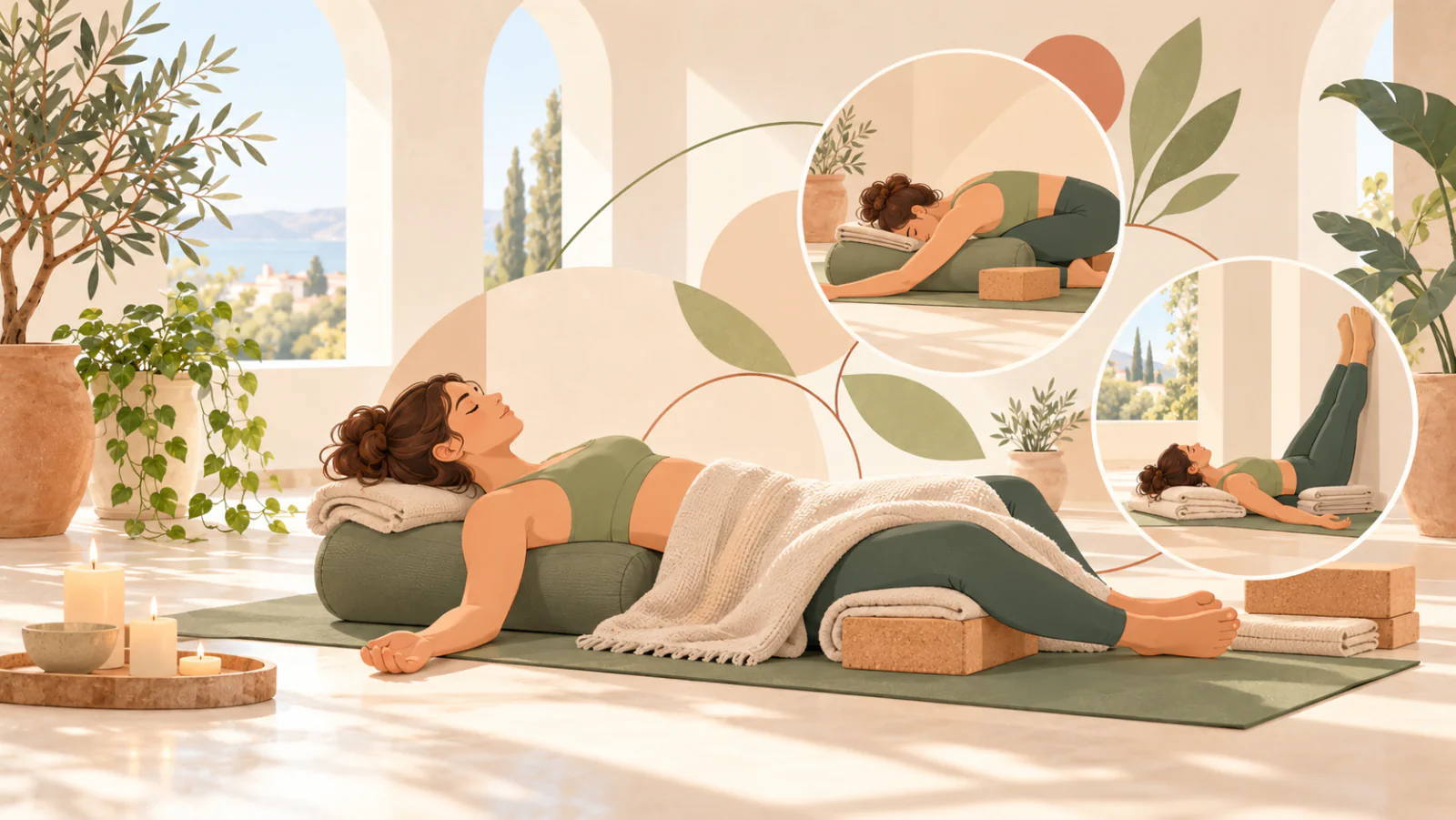
A restorative class is more than a slowed-down flow. It gives supported positions and rest a central place without aiming for intense stretching. Comfort and duration remain individual: stillness does not feel calming to everyone.
Allow Time Without Prescribing a Duration
A few setups may fill an hour, but their number is not a rule. Count explanations, adjustments and prop changes. Offer the option to leave early and do not promise an automatic nervous-system shift after a fixed number of minutes.
Prepare Supports Carefully
Test the stability of blocks, cushions and blankets. Ask whether the setup works without seeking perfect relaxation. A student may want to open their eyes, move or sit up. Avoid making an alternative depend on equipment out of reach during rest.
Give Transitions Attention
Explain the exit before removing a support and let people change position at their own pace. Limit complicated rearrangements. Slow transitions may help, but they do not guarantee calm or erase an uncomfortable experience.
Creasana · Workshop
Try it in your planning
- Choose setups you know how to teach.
- Prepare a seated option.
- Time prop changes too.
- Explain how to leave each position.
Continue reading: Sequencing Yin Yoga: Sensation, Duration and Rest.
References for further exploration
These planning examples should be adapted to your group and training. References provide context for the topics discussed; they do not validate every example sequence.