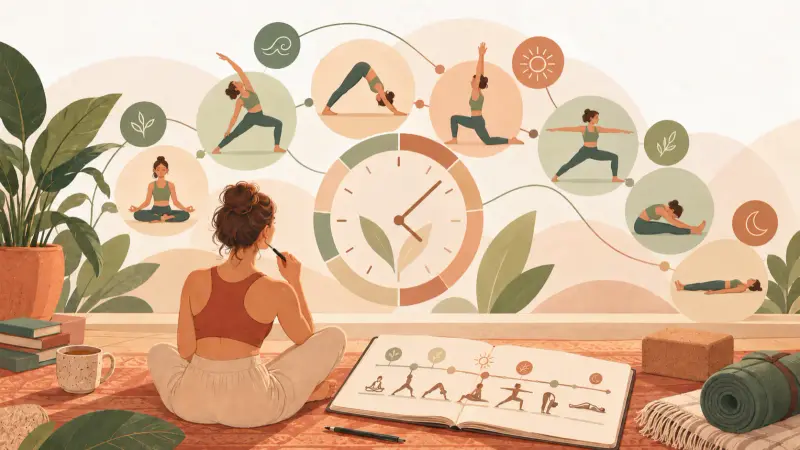
Yin yoga often uses held positions and time for observation. It differs from restorative practice, but it is not defined by seeking pain or guaranteed effects on ligaments. Teach within your training and offer ways to reduce duration and range.
Explore Without Requiring a Sensation
Ask where movement is felt without prescribing a location or intensity. A lack of strong sensation does not mean someone should go farther. Pain, numbness or tingling are reasons to leave the position rather than wait for them to pass.
Plan Rest After a Hold
A familiar position between explorations gives students time to notice and choose what comes next. This is sometimes called a rebound. Its duration can vary; you do not need to promise a surge of energy or tissue repair to explain its teaching purpose.
Give Energetic Themes Context
Meridians and qi belong to traditional frameworks that should be identified as such. Do not present them as proof that a pose treats an organ or emotion. An intention can guide a class without becoming a therapeutic promise.
Creasana · Workshop
Try it in your planning
- Explain your teaching framework.
- Prepare adjustable durations.
- Describe reasons to stop.
- Leave observation time between positions.
Continue reading: Less Is More: Sequencing a Restorative Yoga Class.
References for further exploration
These planning examples should be adapted to your group and training. References provide context for the topics discussed; they do not validate every example sequence.