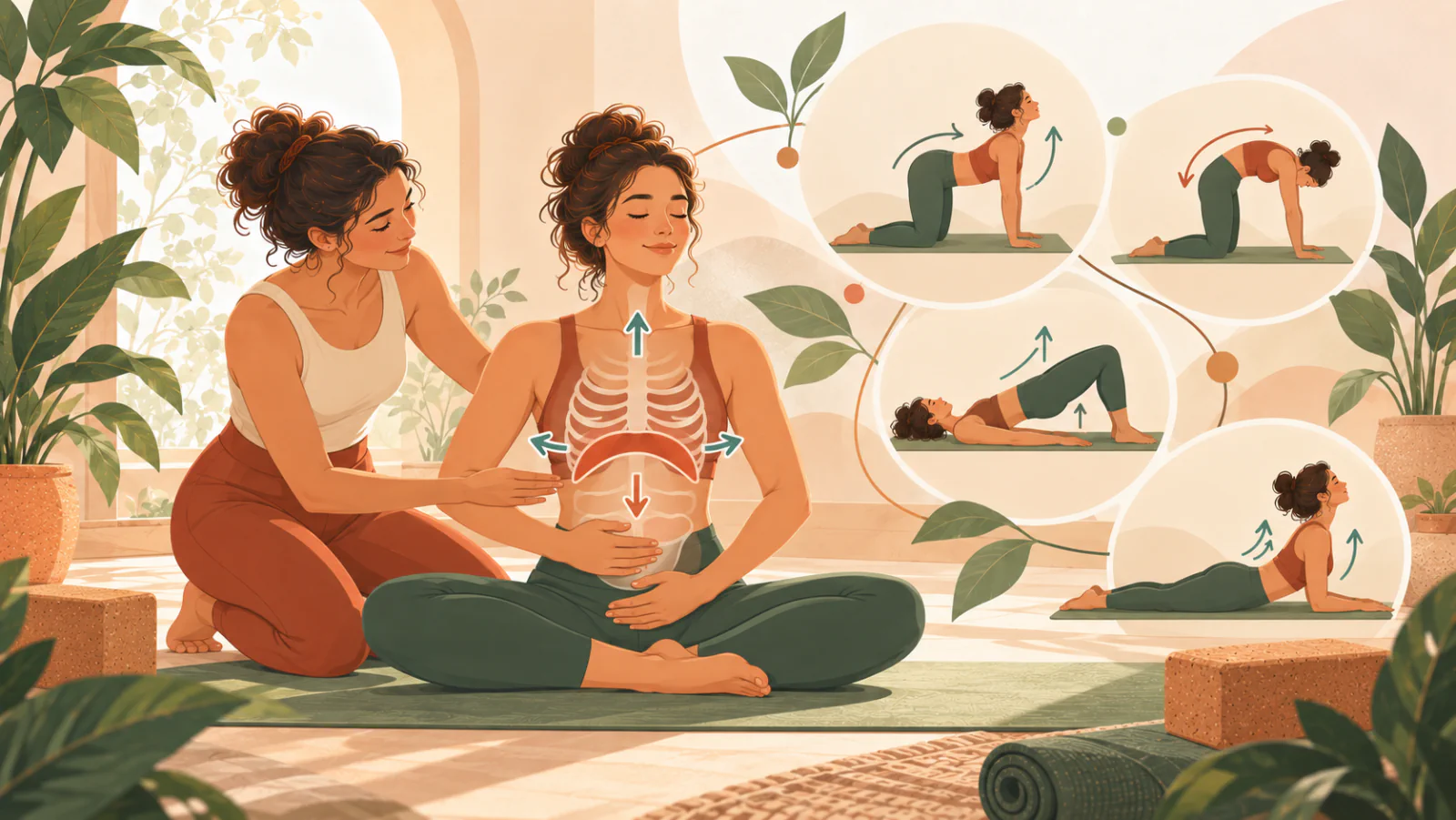
“Pull your navel in” can become an automatic cue without a clear purpose. No sentence fits every pose or every person. When guiding trunk effort, ask what should stay steady, what should move and how students will keep breathing.
Describe an Action Rather Than a Shape
For example, suggest moving one arm slowly while keeping a support steady. A clear task lets students explore effort without constantly drawing the abdomen inward or contracting as hard as possible. Do not present one technique as guaranteed back protection.
Match Effort to the Situation
A standing pose and a plank require different arrangements. Shortening a hold, changing a support or reducing a lever may help more than adding contraction cues. The aim is manageable movement, rather than permanent tension.
Leave Room to Breathe
Invite students to check that breathing remains comfortable without prescribing depth or pace. A breath pause alone does not prove your cue is wrong: ask for feedback and offer less effort. Pain calls for stopping and an appropriate adjustment.
Creasana · Workshop
Try it in your planning
- Identify automatic cues.
- Clarify the purpose of the movement.
- Prepare a way to reduce effort.
- Check that comfortable breathing remains possible.
Continue reading: Planning a Yoga Warm-Up: Arrive, Explore and Build Gradually.
References for further exploration
These planning examples should be adapted to your group and training. References provide context for the topics discussed; they do not validate every example sequence.