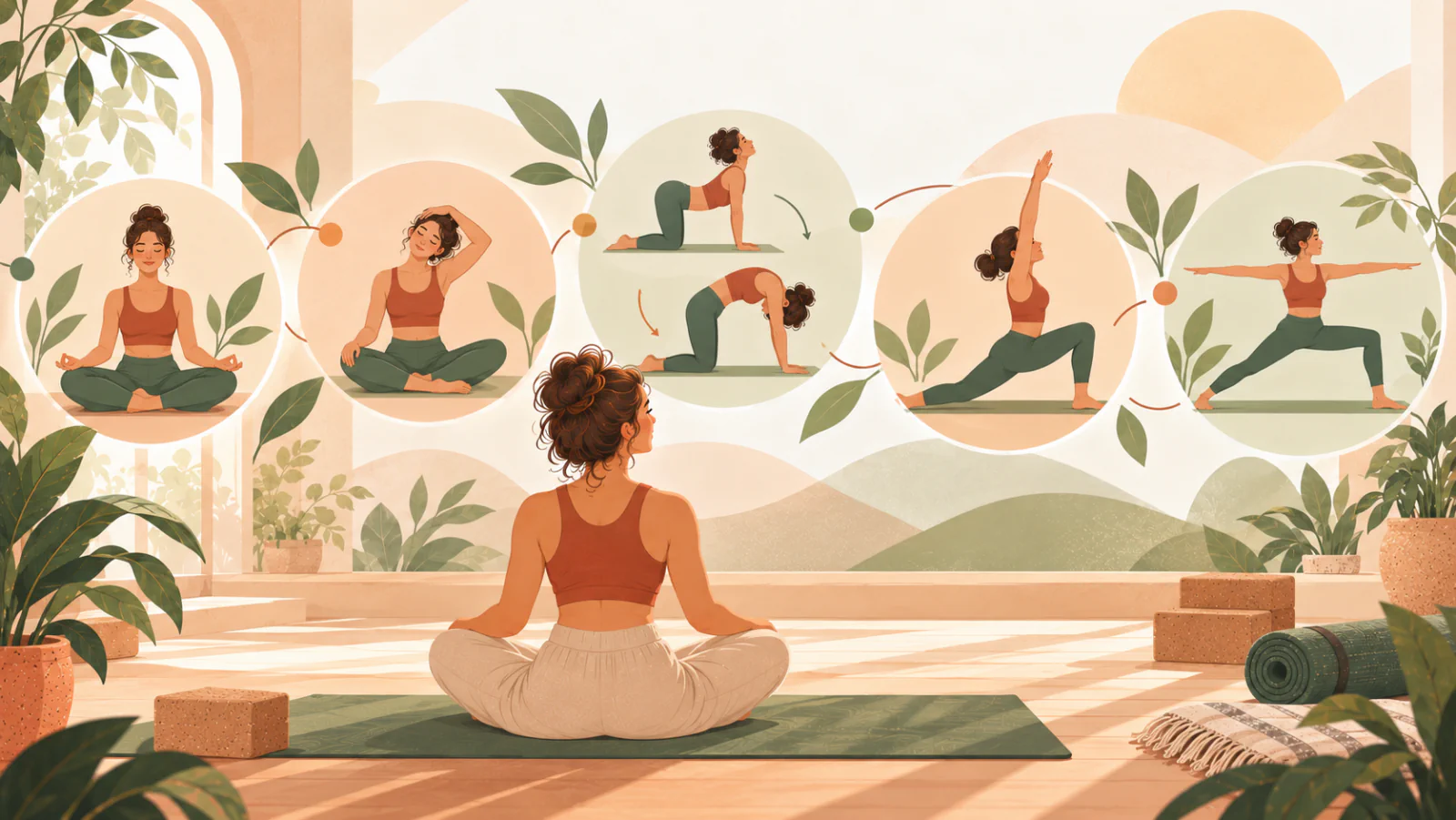
A warm-up introduces the room, instructions and movements that will return later. It does not guarantee a particular emotional state or prevent every injury. Plan it for the group and the rest of the class, with a progression you can slow down.
Allow Time to Arrive
Explain the outline and offer a simple focus: contact with a support, an object in the room or surrounding sounds. Keeping the eyes open remains an option. Observing the breath does not suit everyone; offer another way to participate without asking for justification.
Explore Familiar Movements
Begin within a comfortable range, with repetitions that allow time to understand. These might involve arm movements, weight shifts or gentle spinal movement. Do not require students to move farther with each repetition.
Build the Demands Gradually
Prepare the supports and movements needed later. A floor-to-tabletop-to-standing progression is not compulsory; a seated or standing progression may fit better. Plan level changes without promising specific effects on blood pressure or the nervous system.
Creasana · Workshop
Try it in your planning
- Choose a simple orientation cue.
- Prepare two familiar movements.
- Check what the next block requires.
- Keep an option without level changes.
Continue reading: Finding the Flow: Connecting Breath and Movement Without Enforcing a Rhythm.
References for further exploration
These planning examples should be adapted to your group and training. References provide context for the topics discussed; they do not validate every example sequence.