When students arrive preoccupied, you can offer a simple, predictable practice. Their posture does not reveal their experience. Grounding may mean paying attention to supports or surroundings; it is not a technique that necessarily calms everyone.
Choose an Accessible Reference
Offer contact with the floor, looking at an object or noticing a sound. Some people prefer standing to lying down. Leave eyes open and position changes available rather than making a low posture a condition for feeling safe.
Do Not Impose a Breathing Pattern
Slow breathing may suit some people, while counting or extending the exhale can feel uncomfortable to others. Start with an optional invitation and keep an external focus available. If dizziness, discomfort or anxiety occurs, stop the exercise and return to natural breathing.
Use Props with Agreement
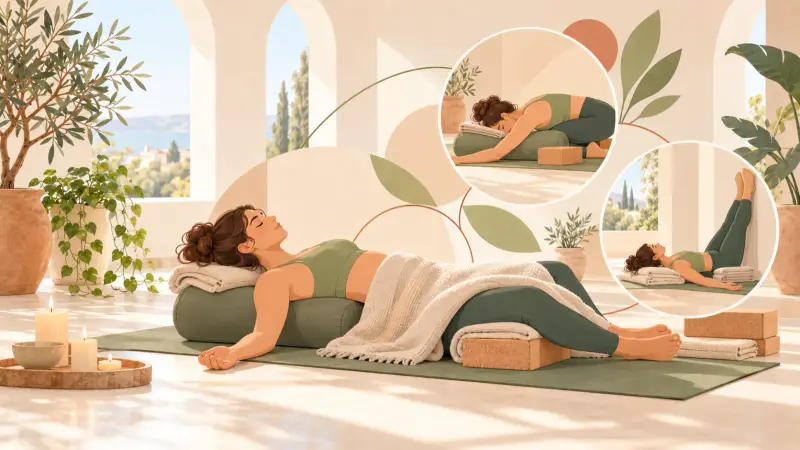
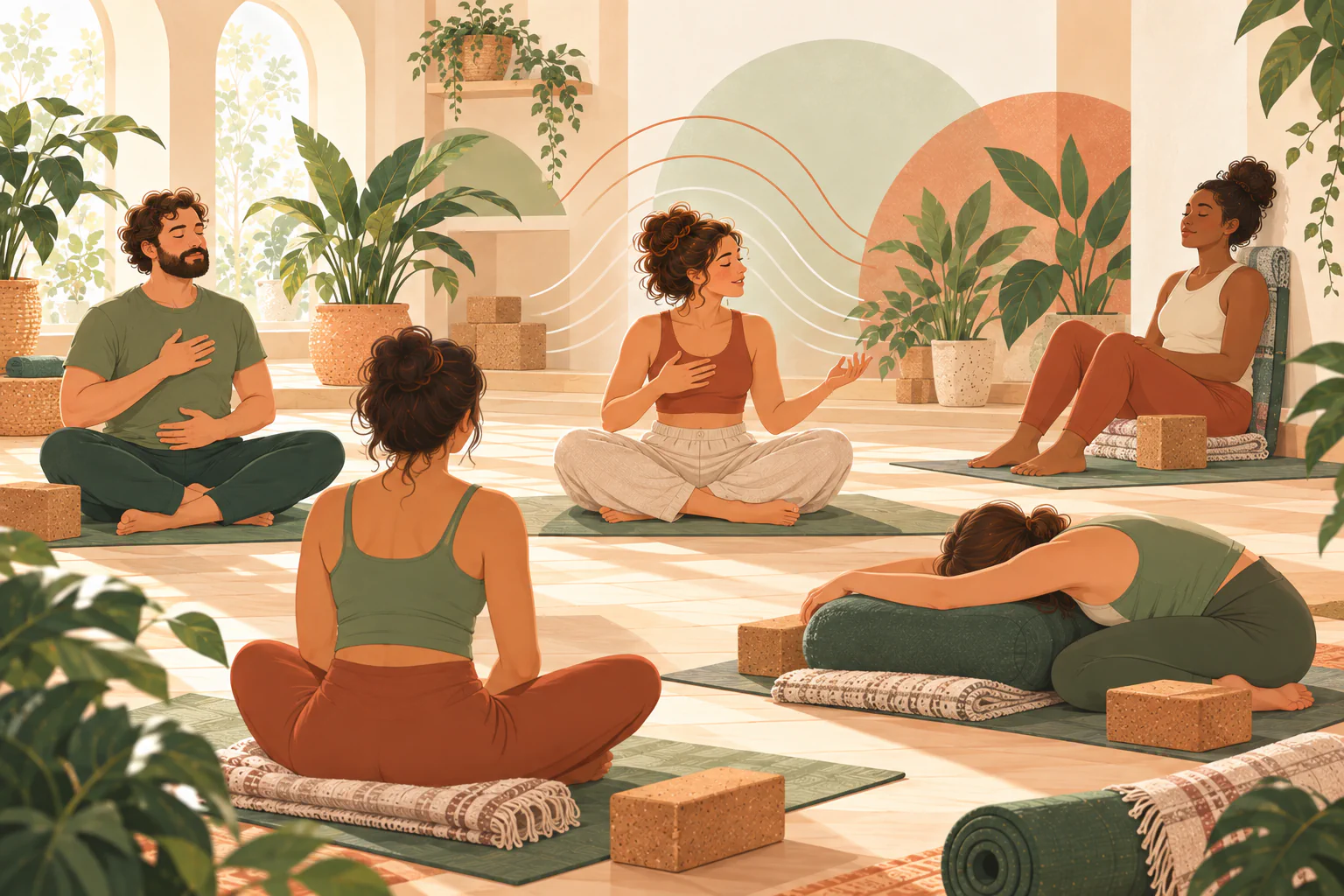
A blanket or cushion may improve comfort, but pressure is not necessarily calming. Do not place weight on someone unexpectedly. Ask permission and preserve an easy exit. A class may complement support, but does not replace psychological care.
Creasana · Workshop
Try it in your planning
- Prepare two possible attention points.
- Keep open eyes as an option.
- Make breathing cues optional.
- Ask before adding a support.
Continue reading: Trauma-Informed Yoga Planning: Choice and Predictability.
References for further exploration
- NCCIH: relaxation techniques, evidence and limitations
- TCTSY: choice and invitational language in a specialized approach
These planning examples should be adapted to your group and training. References provide context for the topics discussed; they do not validate every example sequence.