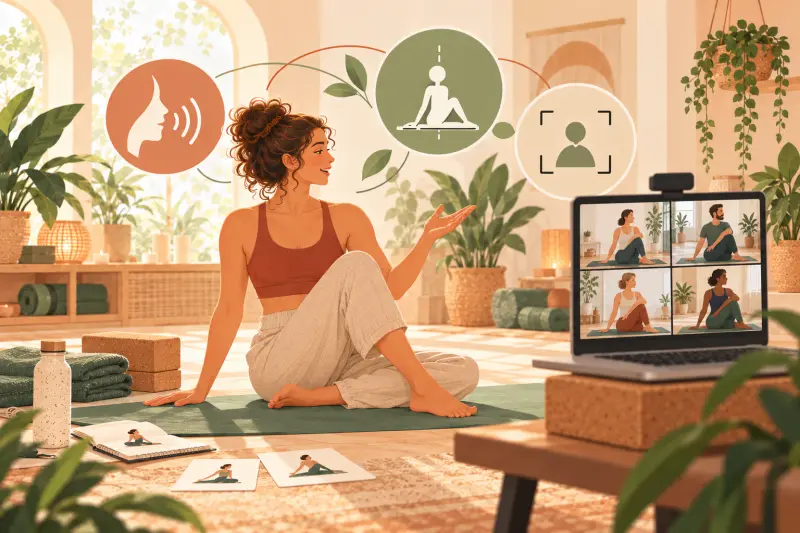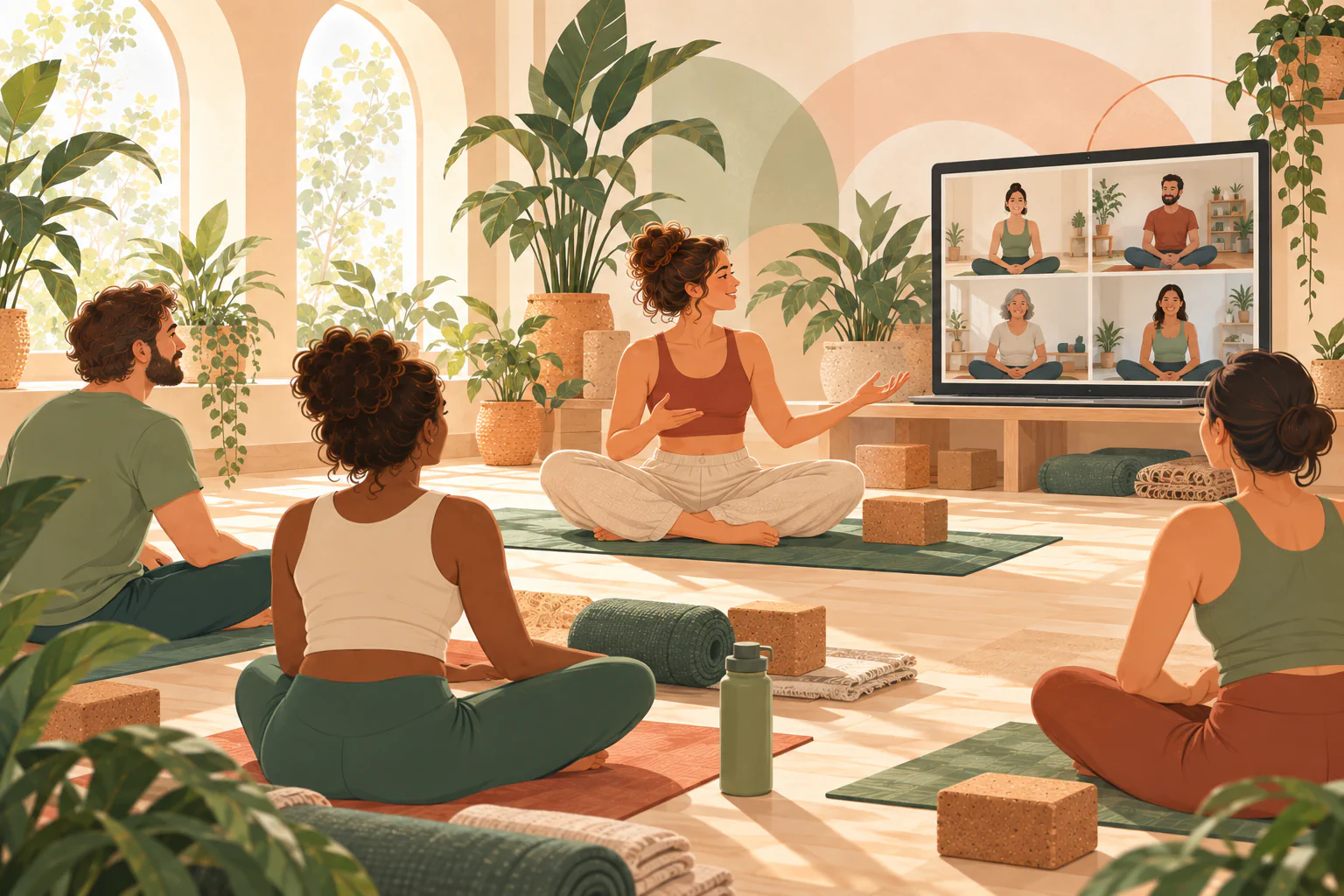
A hybrid class brings together people in the room and others joining remotely. Observation and participation are not the same for both. Plan for that difference rather than assuming online students can simply follow whatever happens in the studio.
Set Expectations for Both Groups
Welcome each group, explain equipment needs and the limits of your observation. Check what the camera shows and inform people in the room if they may be visible. Avoid treating either group as a secondary audience.
Plan Check-In Moments
Choose pauses to check audio, questions and orientation for everyone. If someone helps with technology, obtain their agreement and keep that role technical. Do not default to handing teaching supervision or private information to another student.
Simplify the Progression
Choose movements you can explain clearly without hands-on assistance. Anticipate differences in space and equipment. If technology or group size prevents you from supporting both groups adequately, separate sessions or co-teaching may work better.
Creasana · Workshop
Try it in your planning
- Test audio in the room and remotely.
- Check what the camera captures.
- Prepare two check-in moments.
- Define a fallback for connection problems.
Continue reading: Teaching Mixed-Level Yoga Without Running Two Classes.
References for further exploration
These planning examples should be adapted to your group and training. References provide context for the topics discussed; they do not validate every example sequence.