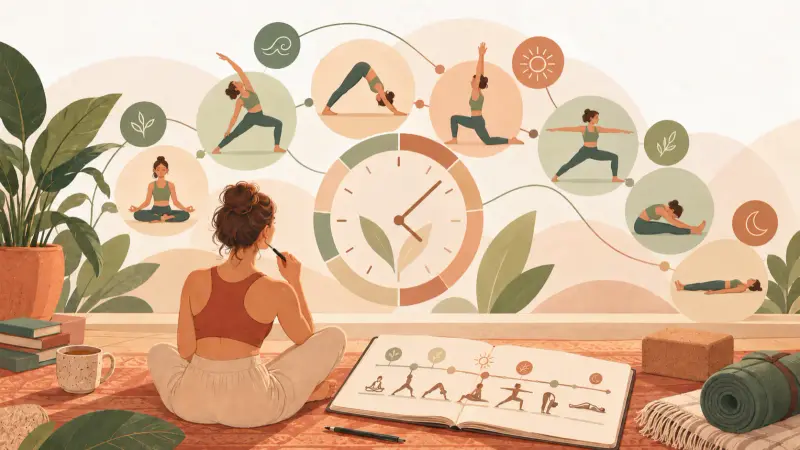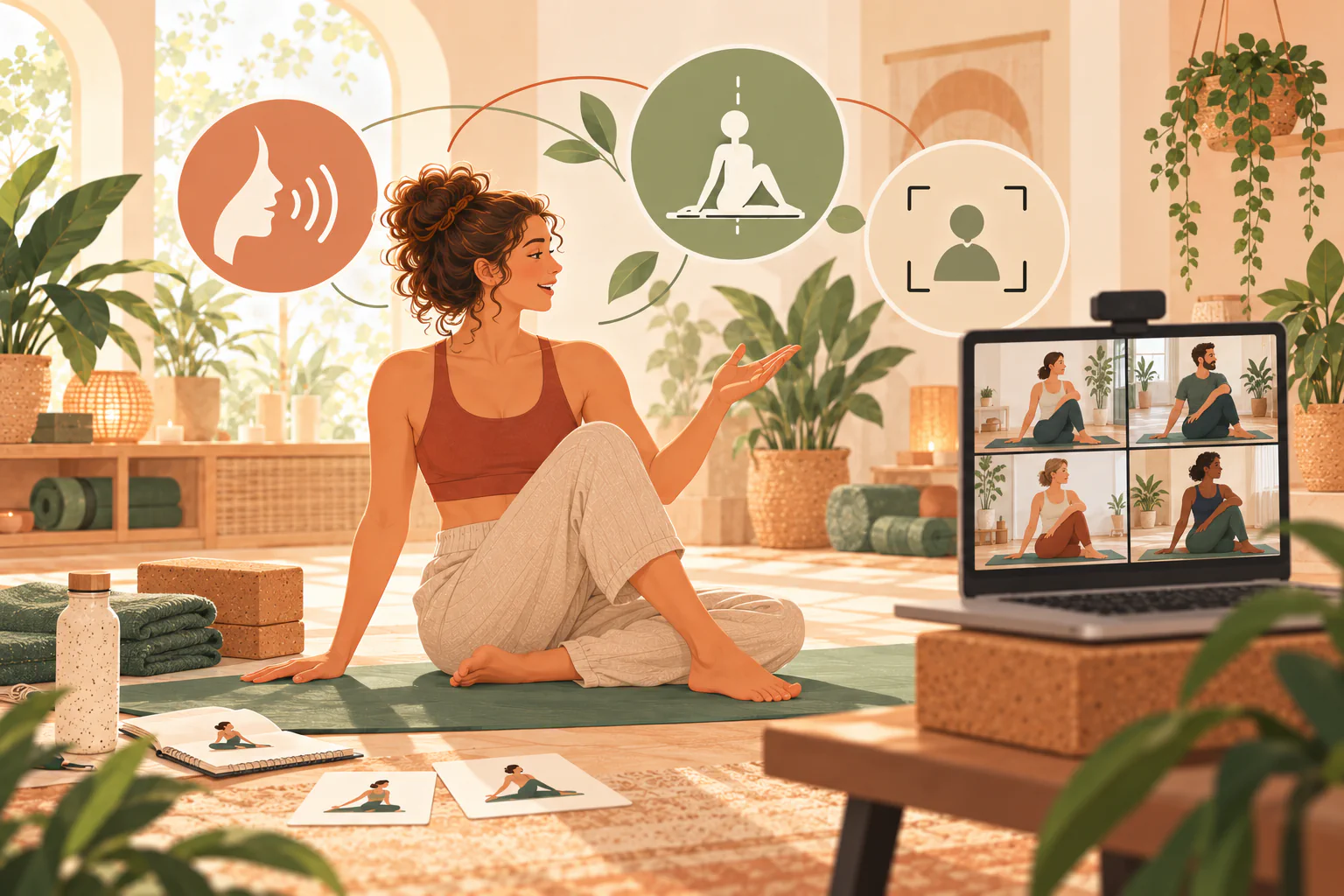
Teaching remotely limits what you can observe and changes communication. A camera does not replace being in the room. Prepare a progression students can follow by listening and explain the format’s limits before practice.
Balance Camera Contact and Observation
Looking into the lens may help you address participants, but you also need to check the screen when useful. Explain what you can and cannot see. Do not present an active camera as a guarantee of supervision or force someone to show their private space.
Check Directional References
Participants do not all place their mats the same way. “Toward the screen” is not always clearer than left and right. Agree on references first and test framing standing and on the floor. Describe exits without requiring students to turn their heads toward the screen.
Test Audio and Plan for Interruptions
Record two minutes from your actual teaching position. Listen for echo and clarity before changing equipment. Explain what to do if the connection drops and choose movements appropriate for limited observation. Do not record participants without appropriate information and agreement.
Creasana · Workshop
Try it in your planning
- Test standing and floor framing.
- Listen to an audio recording.
- Agree on directional references.
- Explain what to do if the connection drops.
Continue reading: Teaching Hybrid Yoga: Sharing Attention Between Room and Screen.
References for further exploration
These planning examples should be adapted to your group and training. References provide context for the topics discussed; they do not validate every example sequence.