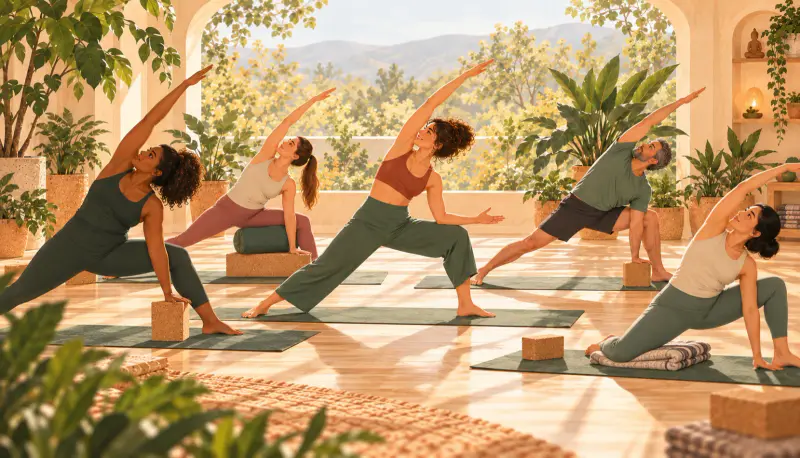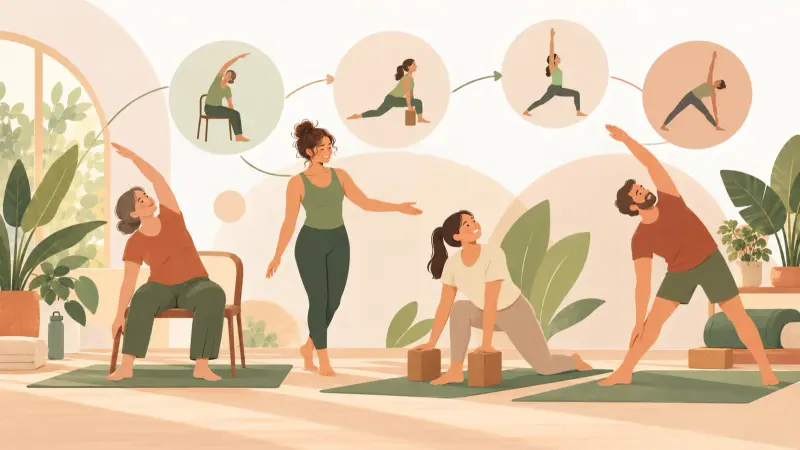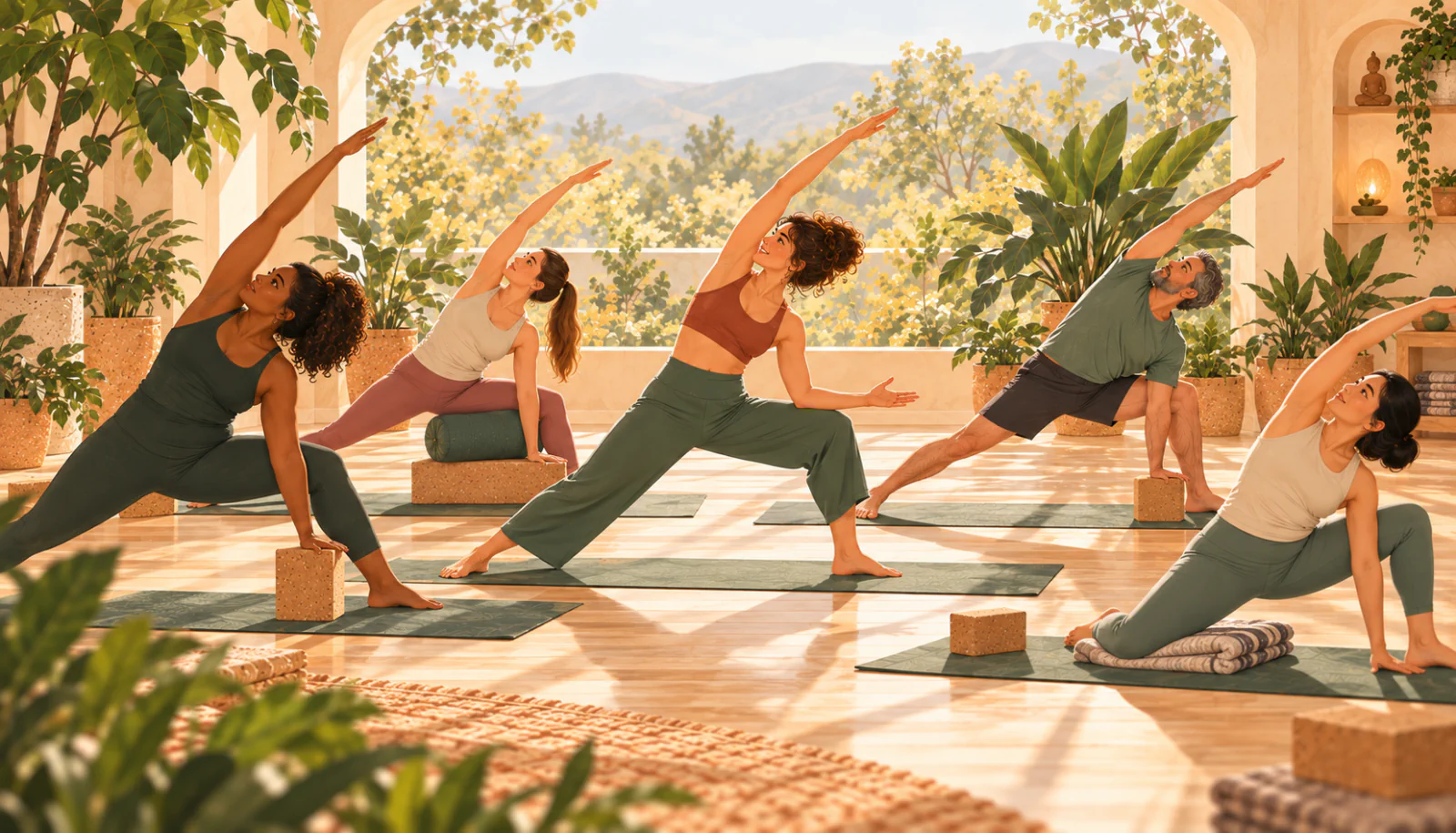
An “all levels” class brings together different experiences, abilities and expectations. Years of yoga do not tell you everything about what someone wants to do today. Instead of preparing two parallel classes, choose a shared progression with several ways to participate.
Offer an Adaptable Starting Point
Begin with an action that is easy to explain, with support or another position available. No starting point automatically suits everyone. Check that people understand how to participate or rest before introducing a variation.
Add Options Without Ranking Them
Describe what changes: moving an arm, changing a support or reducing the range. Avoid “advanced students do this.” A more complex variation is not the expected destination of the class. Offer choices early enough that they do not feel like fallback solutions.
Make Rest Ordinary
Explain where and how to pause, then accept that choice without commenting on ability. Rest does not have to take one particular shape. Keep paying attention both to people continuing and to those stopping.
Creasana · Workshop
Try it in your planning
- Choose a shared intention.
- Prepare two ways to join one passage.
- Offer options before difficulties arise.
- Explain how to rejoin after a pause.
Continue reading: Teaching Off the Mat: Guiding a Class Without Demonstrating Every Pose.
References for further exploration
These planning examples should be adapted to your group and training. References provide context for the topics discussed; they do not validate every example sequence.