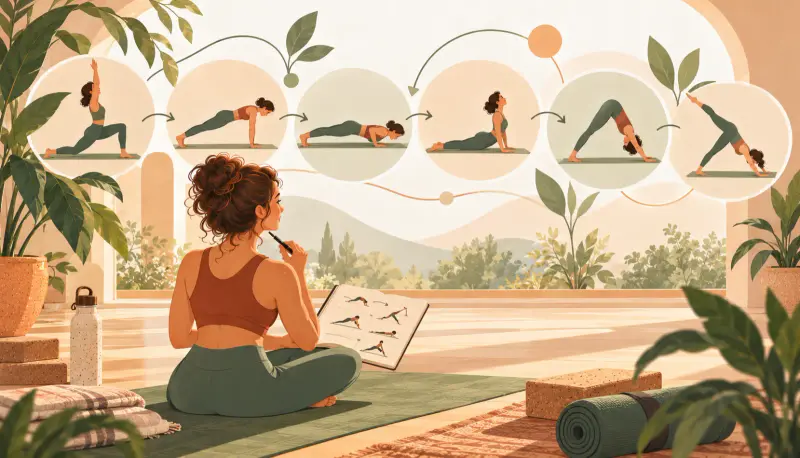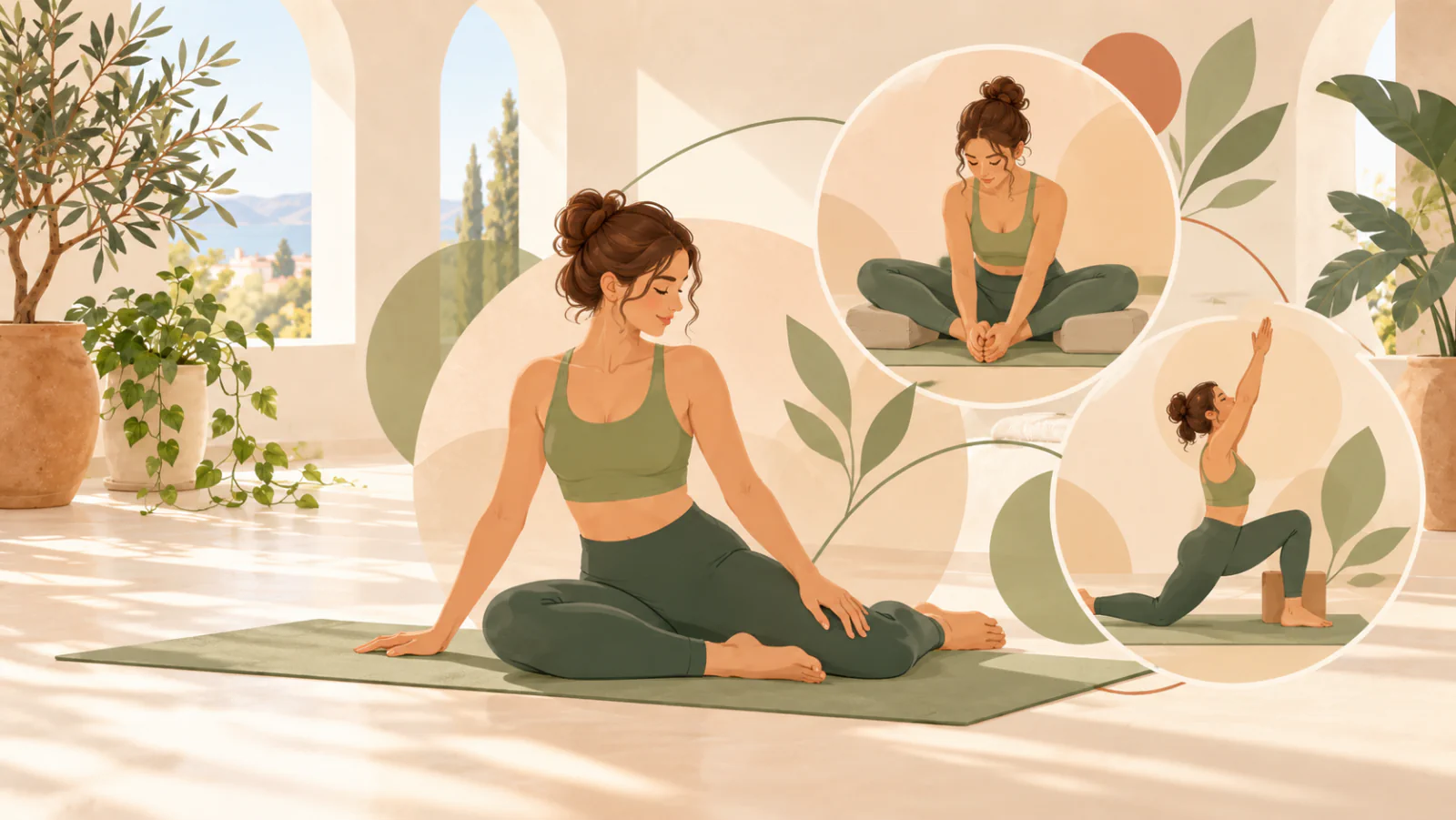
“Hip opening” can imply that more range is always better. A class can instead explore different directions, supports and movement control. Stiffness has several possible causes; it does not diagnose weakness.
Distinguish Active Movement and Support
Muscles contribute to moving a limb actively, while the floor or a prop can help maintain a supported position. These are not simply good and bad ways to practice. Choose according to your aim and the group’s possibilities without forcing range.
Vary the Demands
Supported standing, lying movement and seated exploration use different supports. Avoid stacking long, extreme ranges just to “open more.” Setup and exit deserve as much attention as the time spent in the pose.
Keep the Language Physical
Do not suggest that stiff hips prove trauma or that a pose releases a particular emotion. Emotional responses belong to the individual’s experience. Invite people to notice comfort or discomfort and leave painful movement without assigning a psychological explanation.
Creasana · Workshop
Try it in your planning
- Replace “open as far as possible” with a specific action.
- Vary starting positions.
- Prepare straightforward exits.
- Remove prescribed emotional interpretations.
Continue reading: Cueing the Core Beyond “Navel to Spine”.
References for further exploration
These planning examples should be adapted to your group and training. References provide context for the topics discussed; they do not validate every example sequence.